Capurso is the other Puglia: A village that surprises you every day. With over 200 annual events and a prime location, it's the ideal starting point for exploring the region and soaking up the Apulian spirit.
The name Conversano derived from Casale Cupersanem which was an Apulian episcopal seat in the 5th century AD. In 1054 it was Goffredo D'Altavilla who called it Comes Cupersani and made the town the hub of a very large county that included Bari, Brindisi and Lecce. It was Goffredo's nephew, Roberto, who lost the county following a military defeat. In 1455 the fiefdom passed into the hands of the Acquaviva family until 1806. Worth visiting in Conversano there are the Castle, The ancient residence of the Acquaviva family, on the highest point of the city. Part of the castle is closed to the public because it is a private residence. The part open to the public houses the Pinacoteca Civica.
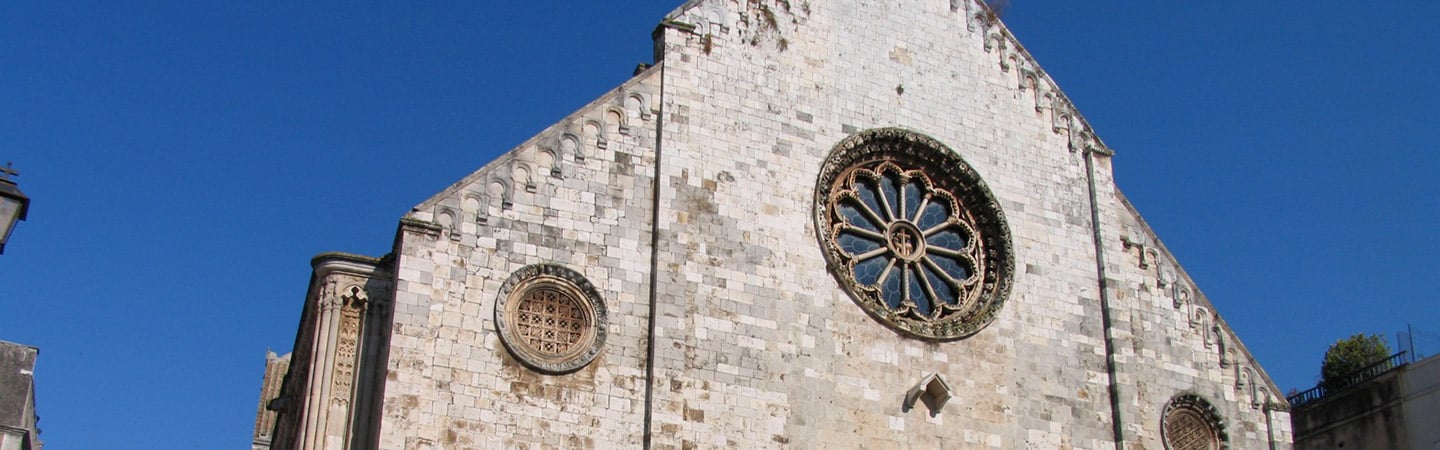
Also worth visiting is the Cathedral of Santa Maria Assunta , in Apulian Romanesque style with a 14th-century rose window. With a Latin cross plan, its interior features a 14th-century wooden crucifix and a painting of the Resurrection from Central Italy. The Monastery of San Benedetto, also known in ancient times as Monstrum Apuliae , has a very interesting history . The Benedictine monastery, an important commercial center in the year 1000 under Godfrey of Hauteville, was entrusted in 1266 by Pope Clement IV to a group of Cistercian nuns exiled from Greece led by Dameta Paleologus. The nuns were granted by the Pope the right to wear the miter and hold the crosier like bishops, exercise episcopal jurisdiction over the clergy of Castellana, and enjoy the honor of kissing their hands.
This exceptional and almost unreal and anomalous situation for Western Christianity meant that the monastery was called Monstrum Apuliae (prodigy of Puglia). It was then Joachim Murat who put an end to the monastery with his diktat “Deleatur hoc monstrum Apuliae” (This monster of Puglia must be destroyed!). Also special is theChurch of Santa Caterina d'Alessandria, recognized as a national monument, with a quadrilobate plan in Byzantine style. In this church the Templars, devoted to Catherine of Alexandria because she was considered their protector, received the blessing before embarking for the Holy Land.
DISTANCE FROM CAPURSO: 20,5 KM – 22 minutes